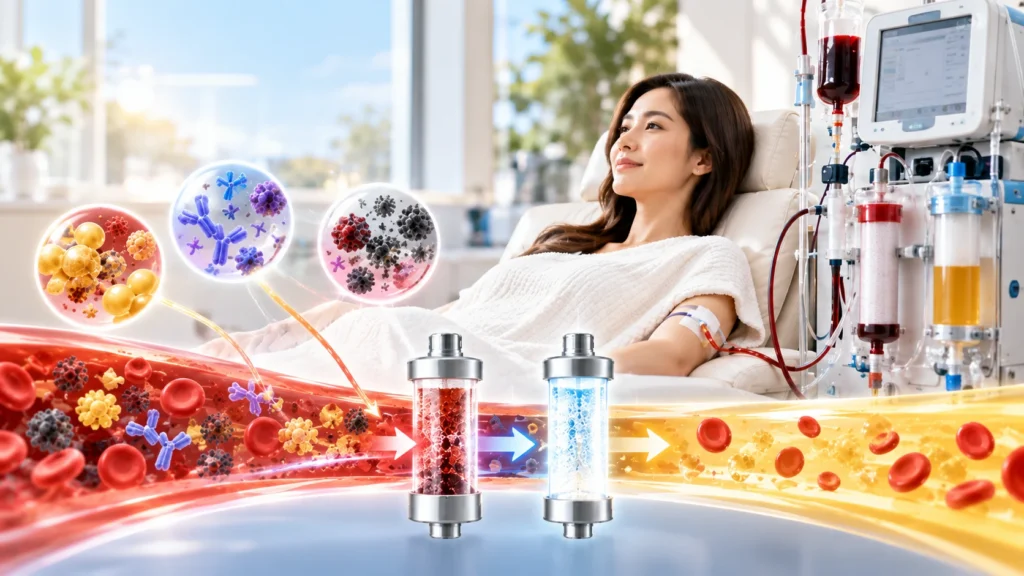
DFPP offers a more selective approach to plasma filtration by processing specific components circulating in the blood. Rather than removing whole blood, Double Filtration Plasmapheresis separates plasma from blood cells and passes the plasma through a second filtration stage before the processed plasma and blood cells are returned to the body.
At Nobel Longevity & Wellness in Bangkok, Thailand, DFPP is provided as a physician-supervised extracorporeal procedure for appropriately assessed patients, with treatment planned according to individual health status and the specific plasma components being targeted.
What Is DFPP?
DFPP stands for Double Filtration Plasmapheresis. It is a blood-processing procedure that uses two filtration stages to selectively process plasma while preserving and returning the patient’s blood cells.
The first filter separates plasma from cellular blood components. The separated plasma then passes through a second membrane designed to retain selected larger molecules. The processed plasma is subsequently returned to the circulation together with the blood cells.
This selective approach distinguishes DFPP from a general concept of blood cleansing. What can be removed depends on the filtration membrane, molecular characteristics of the target, treatment settings, and clinical protocol.
How Does Double Filtration Plasmapheresis Work?
DFPP involves several stages performed through an extracorporeal blood-processing system:
- Blood collection: Blood enters the treatment system through venous access.
- Plasma separation: The first filter separates plasma from red blood cells, white blood cells, and other cellular components.
- Second filtration: The separated plasma passes through another membrane designed to retain selected larger plasma components.
- Return to circulation: The processed plasma and blood cells are returned to the body while the patient is monitored.
The exact treatment process can vary according to the filtration system, intended target, plasma volume, vascular access, and individualized medical protocol.
What Can DFPP Remove From Plasma?
Depending on the filtration membrane and clinical protocol, DFPP can be designed to reduce selected larger molecules or circulating plasma components.
The reference protocol identifies potential targets including:
- Selected atherogenic lipoproteins, including oxidized LDL-related targets
- Selected autoantibodies and immune complexes
- Certain circulating inflammatory proteins
- Selected larger plasma molecules relevant to the treatment objective
DFPP should not be understood as removing every toxin or unwanted substance from the body. Different substances vary in molecular size, protein binding, distribution, and ability to pass through or be retained by a particular filtration membrane.
Who May Consider DFPP?
DFPP may be considered when a physician identifies a clinically meaningful reason to reduce selected circulating plasma components and determines that the filtration system is appropriate for that objective.
Potential applications depend on the individual and may include selected lipid-related or immune-mediated conditions where extracorporeal removal of circulating factors has a medically appropriate role.
DFPP is not intended to replace standard treatment for high cholesterol, hypertension, diabetes, cardiovascular disease, autoimmune disease, or other diagnosed medical conditions. These conditions require appropriate evaluation and ongoing management based on their underlying causes.
What Should You Expect During DFPP?
Before treatment, a physician assesses whether DFPP is appropriate and reviews relevant medical history, medications, laboratory findings, blood pressure, vascular access, and factors related to bleeding or clotting.
During the procedure, blood circulates through the DFPP system while plasma is separated and filtered. The processed plasma and cellular blood components are then returned to the circulation, with monitoring throughout the session.
Temporary effects can include fatigue, dizziness, a cold sensation, or changes in blood pressure. Because DFPP is an extracorporeal medical procedure, suitability and safety should be evaluated individually before treatment.
DFPP at Nobel Longevity & Wellness Bangkok
At Nobel Longevity & Wellness in Bangkok, Thailand, Double Filtration Plasmapheresis is approached as a personalized, physician-supervised plasma-filtration procedure rather than a one-size-fits-all detox treatment.
The medical team considers your health history, laboratory findings, treatment goals, and the specific plasma components being targeted before determining whether DFPP is appropriate.
When DFPP is selected, the goal is to use plasma filtration for a defined purpose and evaluate treatment according to relevant clinical or laboratory findings, while continuing to address the underlying factors that influence cardiovascular, metabolic, immune, and long-term health.