Want a quick overview of your body before deciding which areas of health may deserve a closer look? AI BioBody Scan is a rapid, non-invasive wellness screening designed to provide a broader view of functional patterns across multiple body systems.
At Nobel Longevity & Wellness in Bangkok, Thailand, AI BioBody Scan can be used as a starting point for a personalized health assessment. The scan takes approximately 10 minutes and generates computerized results that can be reviewed together with your symptoms, health history, lifestyle, and wellness goals.
What Is AI BioBody Scan?
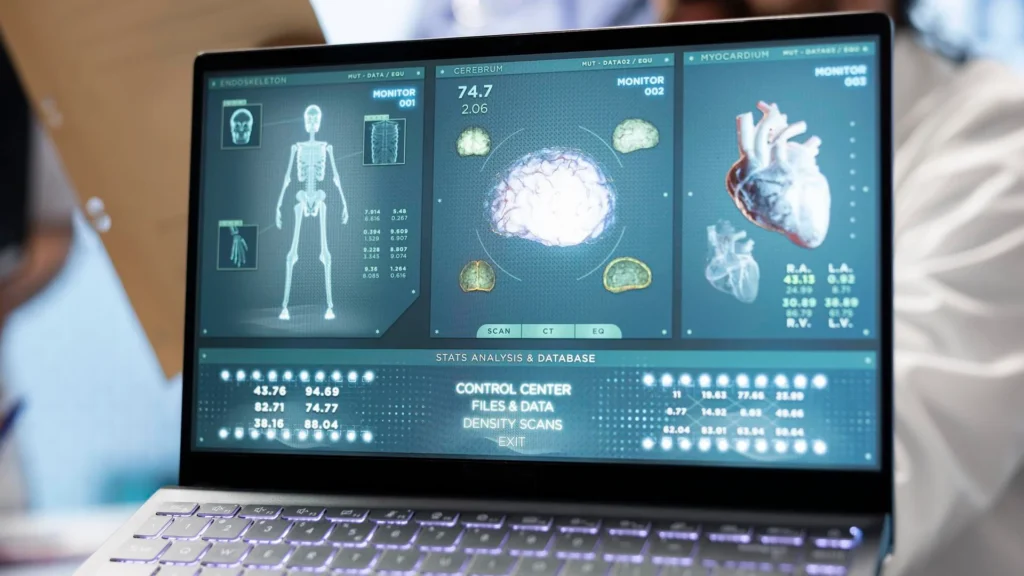
AI BioBody Scan is a computerized wellness screening that uses low-intensity electrical resistance measurements to assess functional patterns across different body-system categories.
The technology uses six contact points located at the left and right temples, arms, and legs. Signals collected during the scan are processed by the system and presented as a functional wellness report.
The scan is designed for screening rather than diagnosis. It does not produce anatomical images like CT or MRI and does not replace laboratory testing when a specific medical condition needs to be investigated.
What Does AI BioBody Scan Assess?
The system organizes its screening results across nine functional categories:
- Digestive function
- Cardiovascular function
- Respiratory function
- Renal and urogenital function
- Neuromuscular function
- Neurological function
- Metabolic function
- Endocrine function
- Immune-related function
These categories provide a broad screening overview. A result in a particular category does not by itself mean that a disease or organ abnormality has been diagnosed.
How Does AI BioBody Scan Work?
The examination is designed to be quick and straightforward:
1. Six Contact Points
Contact points are positioned at the left and right temples, arms, and legs.
2. Electrical Resistance Measurement
A low-intensity direct electrical current passes through the contact system while electrical resistance is measured.
3. Computerized Analysis
The collected signals are processed and organized into different functional body-system categories.
4. Results Review
The generated report can then be reviewed with a clinician to determine whether any findings deserve further discussion or assessment.
What Do the AI BioBody Scan Results Mean?
The system presents results using a bar graph with different risk levels across the body-system categories.
These results should be interpreted as screening information rather than a confirmed medical diagnosis. A higher-risk result may suggest an area worth discussing further, while a lower-risk result does not guarantee that a person is free from disease.
If a result corresponds with symptoms, medical history, or known risk factors, the clinician may recommend appropriate laboratory tests, imaging, functional testing, or specialist assessment.
Who May Consider an AI BioBody Scan?
AI BioBody Scan may be considered by adults who want a quick and non-invasive overview of their wellness before discussing their health in greater detail.
- People interested in preventive health and wellness
- People who want a broader overview of multiple functional health categories
- Those beginning a personalized wellness or longevity program
- People who want additional information to guide a health consultation
Pregnant women and people with metal or electronic devices in the body, including pacemakers or implants, should inform the medical team before the examination so suitability can be assessed according to the device protocol.
AI BioBody Scan at Nobel Longevity & Wellness Bangkok
At Nobel Longevity & Wellness in Bangkok, Thailand, AI BioBody Scan provides a convenient starting point for a broader conversation about your health.
The approximately 10-minute, non-invasive scan provides computerized screening information across multiple functional body-system categories. Your results can then be considered alongside symptoms, medical history, lifestyle, previous test results, and personal health goals.
When a result suggests that an area deserves closer attention, appropriate standard testing can be considered to investigate the concern further. The goal is to use the scan to help identify the right next questions rather than treating a device-generated score as a final diagnosis.